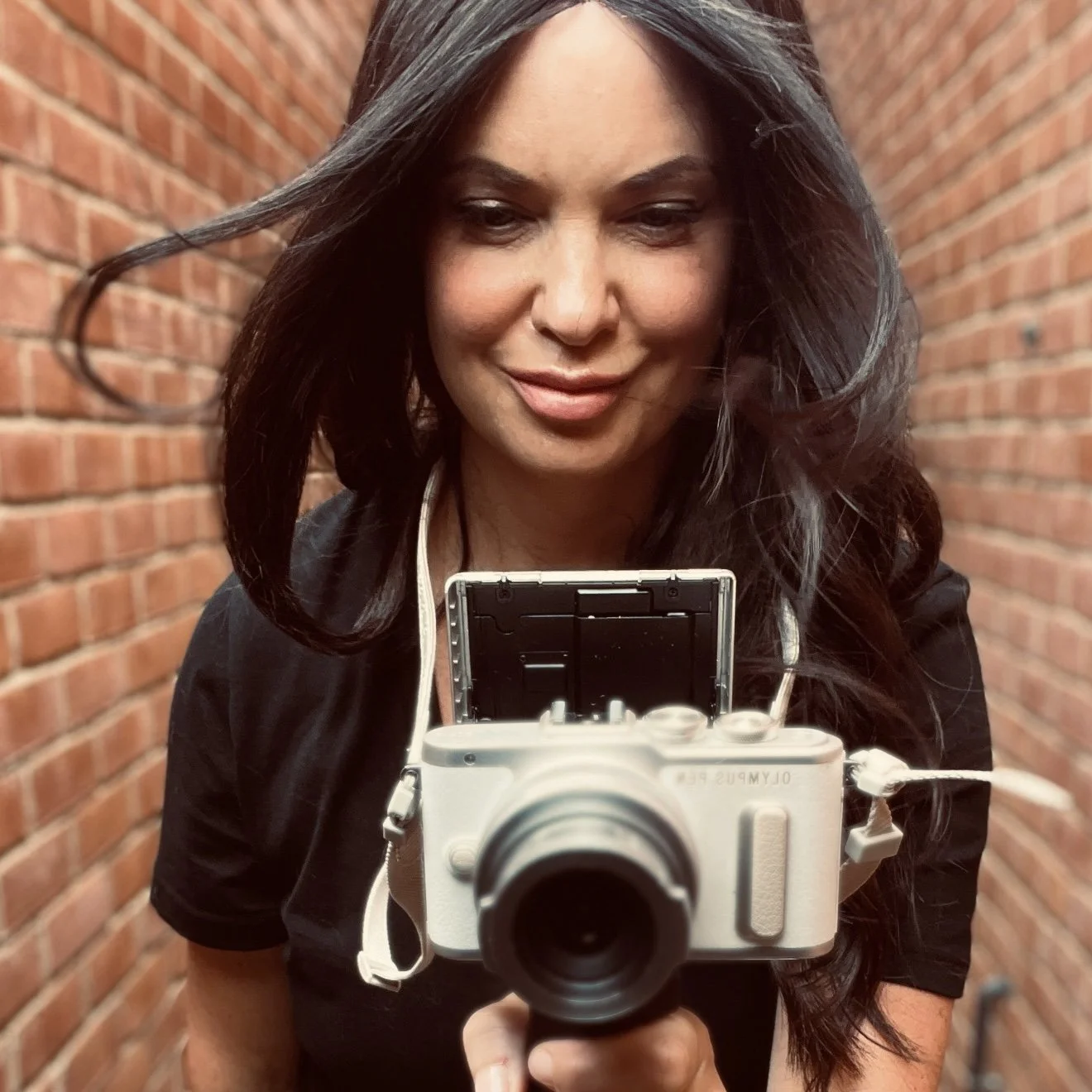
Where I Put the Camera Matters.
Perspective itself is storytelling.
Field Note: 005 20th August 2026
There is usually an obvious place to stand.
I’m rarely interested in it.
At a wedding, the clearest view is not always the one that tells me the most. Sometimes I want to be behind the curtain rather than in front of it. Across the room rather than beside you. Looking through a doorway, catching a reflection in glass, or allowing someone to pass through the foreground and briefly obscure what is happening beyond.
I like layers.
I like not being able to see everything at once.
Nearly thirty years ago, I remember reading film director Shekhar Kapur talking about his approach to Elizabeth. He was interested in using perspective, architecture, light and movement not simply to show us what was happening, but to communicate something about how it might have felt to be there.
That idea stayed with me.
Long before I was filming weddings, it planted the thought that where you put a camera is not simply a practical decision.
It is part of the storytelling.
Sometimes I deliberately get in the way.
Fabric. Gauze. Glass. Flowers. Doorways. Shoulders. Mirrors. Candlelight. Shadow.
Things that might conventionally be considered an obstruction can be exactly what I want in the frame.
I might film a bride through the movement of her veil rather than move around it. I might catch somebody in a mirror instead of turning the camera directly towards them. I might stay outside a room and allow the doorway to frame what is happening within it.
Sometimes I will begin with almost nothing; an abstract shape, a fragment of light, a detail close to the lens, and allow the picture to reveal itself slowly.
These aren't effects I decide to add afterwards.
They're things I'm looking for while I'm there.
And perhaps that is the important distinction.
I’m observing.
Reveal less. Feel more.
We have become very accustomed to images that explain themselves immediately.
Here is the dress.
Here are the flowers.
Here are the guests.
Here is the bride.
Here is the groom.
There is nothing wrong with those images. They matter. I make them too.
But they aren't the whole story.
Sometimes revealing less allows us to feel more.
A hand disappearing around a doorway. A face briefly appearing in a reflection. Somebody watching from the edge of the room. Light moving across fabric. Two people talking in the distance when neither knows they are being filmed.
These fragments create something different.
They give us a sense of being there rather than simply being shown what was there.
The camera has a point of view.
I think about height. Distance. Movement. Stillness. Foreground. Negative space. Light.
I think about whether I want the camera to feel close to someone or simply observe them.
I think about whether a moment needs movement or whether moving the camera would actually diminish it.
And I think about what I deliberately leave outside the frame.
Because composition isn't only about what you include.
It's also about what you withhold.
There is a quiet tension in not quite seeing everything. The eye searches. It waits. It discovers.
That is often much closer to the experience of memory, too.
We don't remember an important day as a perfectly ordered sequence of wide shots.
We remember fragments. The way the light looked through a window. Someone's expression across a room. The movement of a dress disappearing up a staircase. A glimpse of somebody we love amongst a crowd. A reflection. A shadow. A moment we weren't expecting to notice at all.
I don't want every image to announce itself.
Some should.
There are moments that deserve clarity, scale and spectacle.
But others should feel as though you happened upon them.
That's the balance I'm always looking for when I film.
Not simply coverage of what happened, but a collection of perspectives that gradually allow you to experience it again.
Because where I put the camera matters.
Where we stand changes what we see.
And sometimes, it changes what we feel.